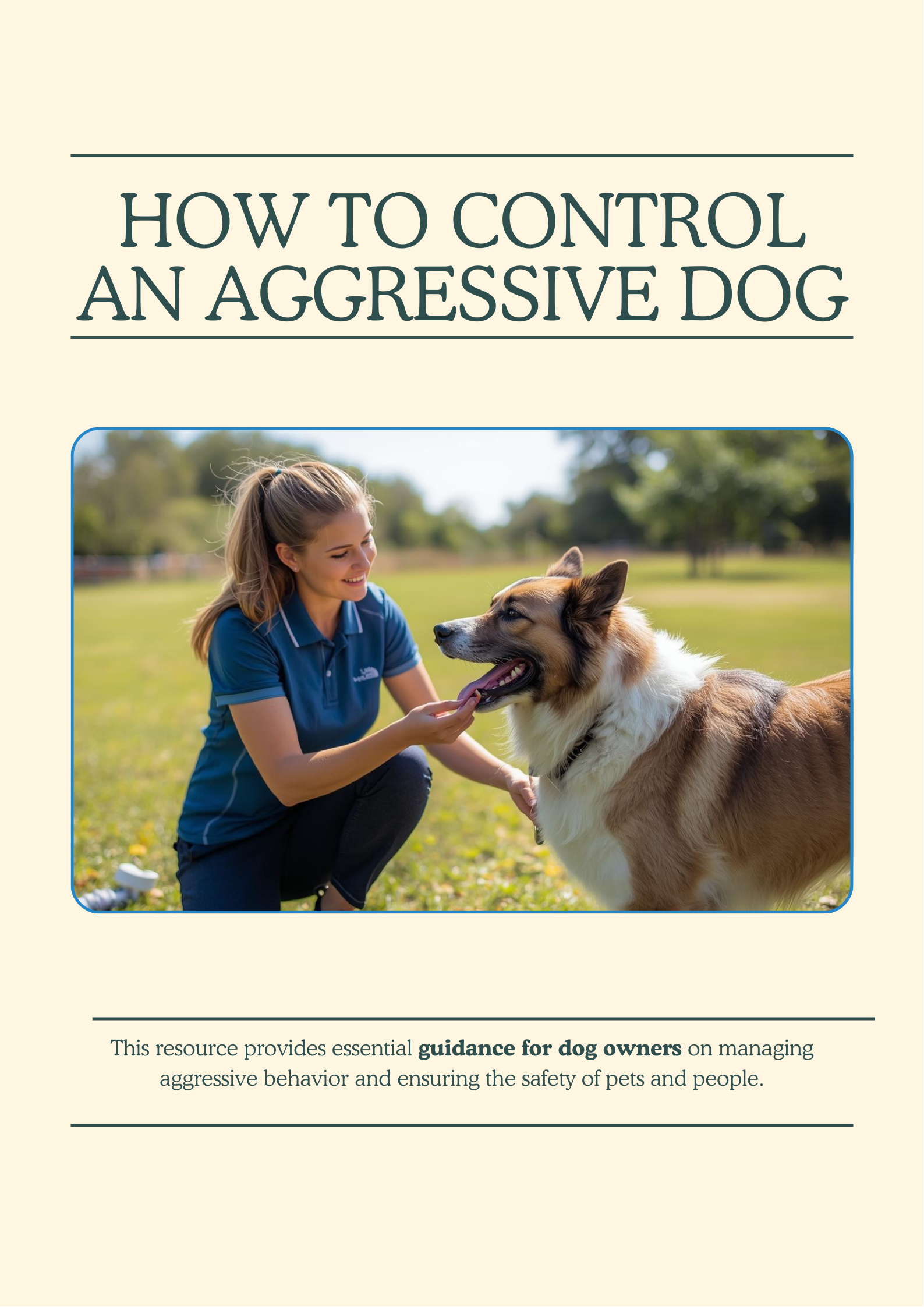
Learning how to control an aggressive dog isn’t about dominance or force—it’s about understanding the invisible architecture of your dog’s nervous system and building control from the inside out. The methods that actually work have nothing to do with the alpha myths still circulating online.
Redefining “Control”: From Suppression to Self-Regulation
Most people asking how to control an aggressive dog actually want suppression—making the behavior stop immediately. But true control means teaching your dog to regulate their own emotional responses. The difference? Suppression creates a pressure cooker that eventually explodes. Self-regulation builds lasting change.
When you understand how to control an aggressive dog through self-regulation, you’re teaching your dog to downshift their own arousal levels. This requires recognizing that aggression exists on a ladder with many rungs. At the bottom is alertness, then tension, then stiffness, then growling, then snapping, and finally biting. Most intervention happens at the top rungs when it’s too late.
Real control means interrupting at the bottom rungs—when your dog’s breathing changes, when their ears shift position, when they pause mid-sniff. These microseconds are your golden opportunity. At this stage, you can redirect attention, create distance, or employ calming protocols before the emotional avalanche begins.
The Arousal Threshold Map
Here’s a technique for how to control an aggressive dog that professionals use but rarely explain to owners: mapping your dog’s arousal thresholds throughout the day. Your dog’s capacity for self-control fluctuates dramatically based on time, location, and accumulated stress.
Keep a 7-day log noting when aggressive reactions occur. You’ll likely discover patterns: worse in the morning before exercise, worse after the mail delivery, worse when neighborhood kids return from school. These patterns reveal when your dog’s nervous system is most vulnerable.
Once you’ve mapped these danger zones, restructure your dog’s day accordingly. If evenings are volatile, that’s when you implement the most rigorous management—closed curtains, white noise machines, high-value enrichment activities that engage the seeking/foraging parts of their brain instead of the reactive parts.
Understanding how to control an aggressive dog means accepting you cannot maintain the same expectations throughout the day. Just as you wouldn’t expect optimal performance from yourself during a migraine, your dog cannot maintain control when their nervous system is depleted.
The Emergency U-Turn Protocol
When you’re caught off-guard and need immediate control, the emergency U-turn becomes your most valuable tool. This isn’t taught in basic obedience, but it’s essential for how to control an aggressive dog in real-world scenarios.
Start training this in your home with zero triggers present. Say your marker word (mine is “let’s go”), make an about-face, and move briskly in the opposite direction. Reward heavily when your dog follows. Practice until this becomes muscle memory for both of you.
The magic happens when your dog learns this pattern: marker word equals “stop thinking about that thing and follow me to something better.” In the field, the moment you see a trigger before your dog fully reacts, deploy the U-turn. You’re not fleeing—you’re proactively managing the situation before control is lost.
How to control an aggressive dog often comes down to these split-second decisions. The U-turn gives you a rehearsed response when your thinking brain shuts down under pressure.
The Energy Equation Nobody Mentions
Physical exhaustion is not the answer to how to control an aggressive dog—it’s often part of the problem. Over-exercised dogs enter a state of “tired and wired” where their body is exhausted but their nervous system remains hyper-vigilant. This is when control crumbles.
The solution lies in balancing physical exercise with mental depletion and nervous system calming. A properly balanced day for an aggressive dog might include: 20 minutes of sniff-walking (not power walking), 15 minutes of training games that require thinking, 30 minutes with a frozen Kong, and an afternoon nap in a dark, quiet room.
Notice what’s missing? Hours of fetch, dog park visits, and high-intensity running. These activities spike cortisol and adrenaline—the exact hormones that fuel aggression. When figuring out how to control an aggressive dog, less intense exercise often yields more control.
The Language Barrier: Teaching “Opt-Out”
This changes everything about how to control an aggressive dog: teach them a formal way to say “I need space.” Most dogs only have one option when uncomfortable—escalate to aggression. Give them alternatives.
Train a specific behavior that means “I’m done.” This might be going to a designated mat, moving behind you, or touching your hand with their nose. Heavily reward this behavior in low-stress situations. Then, crucially, honor it every single time—even when inconvenient.
A dog who knows they can opt-out without punishment rarely needs to resort to aggression. They have a communication tool that works. This transforms how to control an aggressive dog from external management to collaborative communication.
The Trigger Desensitization Hierarchy
Generic exposure doesn’t teach you how to control an aggressive dog—systematic desensitization does. Create a specific hierarchy for each trigger, breaking it into trainable components.
For dog reactivity, your hierarchy might include: pictures of dogs (no reaction expected), dogs at 100 feet, dogs at 50 feet, dogs at 30 feet, passing dogs, approaching dogs. You work each level until your dog can maintain calm for three consecutive successful exposures before moving closer.
But here’s the critical part: if your dog reacts, you’ve moved too fast. Drop back two levels in the hierarchy and rebuild confidence. How to control an aggressive dog requires the patience to progress at your dog’s pace, not your desired timeline.
The Touch Temperature Technique
Physical contact dramatically affects control. When learning how to control an aggressive dog, understand that restraining, grabbing, or tightening the leash typically escalates aggression by triggering opposition reflex—the instinct to pull against pressure.
Instead, practice “neutral contact.” Keep leash pressure consistent and loose. If you must restrict movement, use your body position to guide rather than force. Place yourself between your dog and the trigger, creating a physical barrier without touching your dog at all.
During calm moments, practice touch exercises that lower arousal: slow strokes from head to tail, gentle ear massages, chest scratches. Your hands should predict relaxation, not restraint. This builds an association where your touch becomes a calming tool rather than a control struggle.
The Medication Conversation
Here’s honest talk about how to control an aggressive dog: sometimes behavior modification alone isn’t enough. If your dog exists in constant high alert, if they cannot calm even in safe environments, if aggression appears suddenly or severely, veterinary behaviorist consultation is essential.
Anti-anxiety medications aren’t giving up—they’re providing the neurological foundation that makes training possible. A dog whose brain chemistry prevents learning cannot benefit from behavioral work alone. Medication can lower baseline anxiety enough that your dog can actually process and retain training.
Many dogs need temporary pharmaceutical support during intensive behavior modification, then successfully wean off once new neural pathways are established. This isn’t weakness; it’s comprehensive treatment.
The Safety Net System
Knowing how to control an aggressive dog requires acknowledging that control sometimes fails. Build redundant safety systems: a secure harness plus a collar with two attachment points, doors with baby gates as backup, a trained emergency “down-stay” separate from your regular down command.
These systems aren’t admitting defeat—they’re responsible ownership. Even with excellent management, unexpected variables occur: a cat darts across your path, a child on a bike appears suddenly, another dog breaks free from their owner.
Your safety net ensures that when the unexpected happens, you have multiple layers between your dog and disaster.
The Bottom Line
Understanding how to control an aggressive dog means accepting that control isn’t a destination—it’s an ongoing practice. Your dog might achieve remarkable progress, then require management adjustments after stressful life changes like moving, new family members, or aging.
Real control comes from building a lifestyle structure that sets your dog up for success, maintaining that structure consistently, and adapting it as needs evolve. It’s not glamorous, but it works.
The dogs who achieve lasting transformation have owners who committed not to a training program, but to a way of living that prioritizes their dog’s nervous system health every single day. That’s how you truly control an aggressive dog—not through force, but through understanding.
Also read related article on why dogs run away.