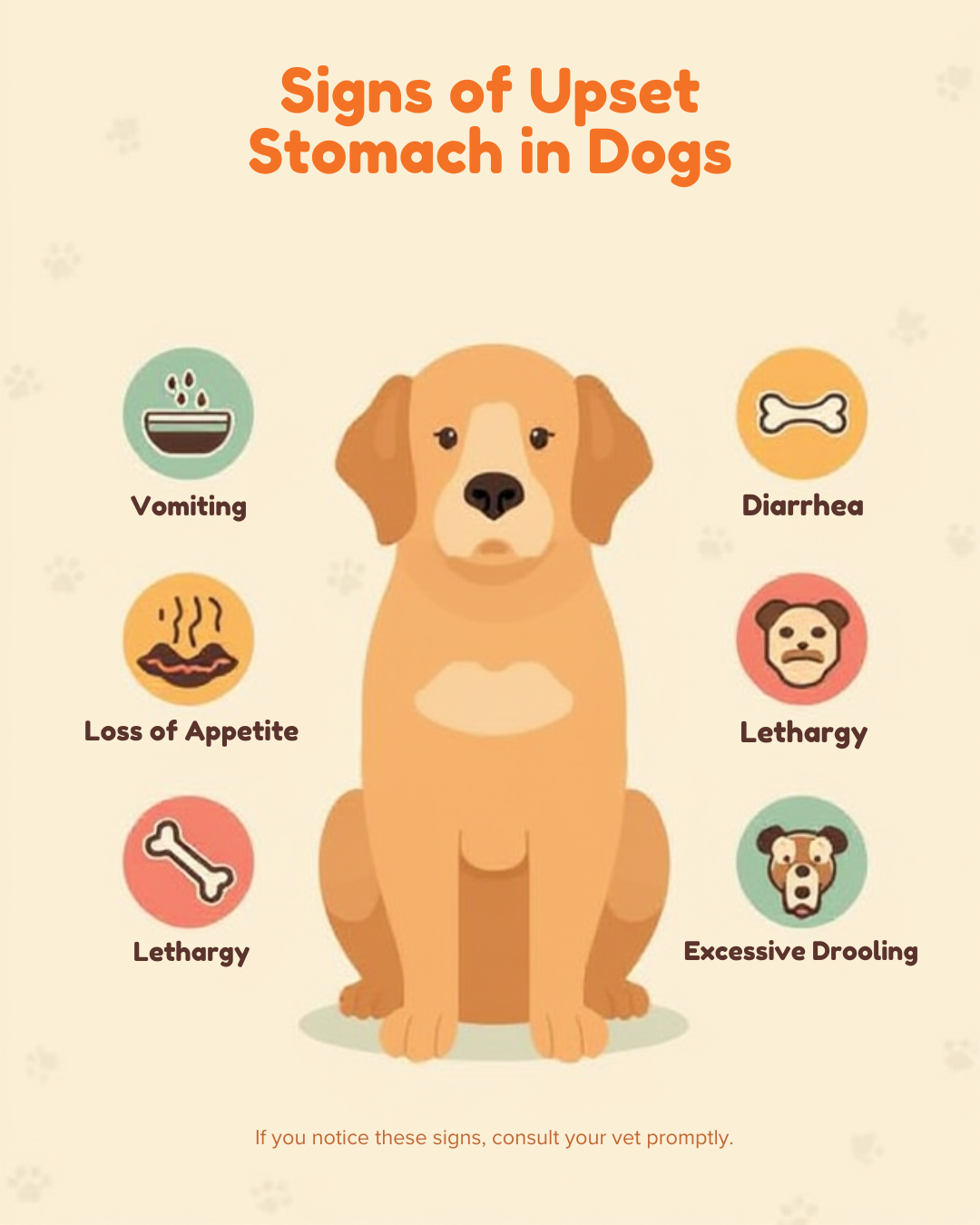
As a dog parent, you know that sinking feeling when your furry companion isn’t acting quite right. Maybe they’re staring at their food bowl with confusion, or perhaps you heard those ominous stomach gurgles at 3 AM. Recognizing the signs of upset stomach in dogs goes beyond basic symptom spotting—it’s about understanding the story your dog’s body is telling you.
The Behavioral Red Flags Nobody Talks About
Most articles list physical symptoms, but signs of upset stomach in dogs often appear first as behavioral changes that are easy to miss:
The Shadow Effect: When dogs feel nauseous or uncomfortable, they often become your shadow, following you from room to room. This isn’t separation anxiety—it’s their way of seeking comfort and security when they feel vulnerable. They’re basically saying, “Something isn’t right—do you see it too?”
The Unusual Sleeping Positions: A dog with stomach discomfort will avoid their usual curled-up sleeping position. Instead, you’ll find them stretched out completely, often on cool surfaces like bathroom tiles. They’re instinctively trying to relieve abdominal pressure and reduce internal heat that comes with inflammation.
The Frequent Position Changes: Watch for dogs who lie down, then immediately stand up, circle, and lie down again repeatedly. This restless behavior indicates they’re trying to find a position that doesn’t aggravate their stomach discomfort. It’s similar to how we toss and turn with a stomachache.
The Hesitant Eating Pattern: Here’s a subtle sign most people miss—dogs who approach their food bowl, sniff, walk away, return, and repeat this cycle multiple times. They’re hungry but their stomach is warning them that eating might make things worse. This internal conflict creates the hesitation pattern.
Physical Signs: Beyond the Obvious
The Auditory Clues: Loud, rumbling stomach sounds (borborygmi) are obvious signs of upset stomach in dogs, but pay attention to the frequency. Occasional gurgles are normal during digestion. However, continuous rumbling for more than 30 minutes, especially with other symptoms, signals a problem.
The Saliva Story: Excessive drooling isn’t just a symptom—it’s your dog’s body preparing for potential vomiting. You’ll notice thick, ropy saliva rather than the normal thin drool. Some dogs also develop “cotton mouth” where they smack their lips repeatedly and seek water but don’t drink much.
The Arch-Back Stance: When standing, dogs with stomach pain often arch their backs slightly and tuck their abdomen up. This is different from normal posture—they’re literally guarding their belly area. You might also notice they flinch or tense when you touch their stomach region.
Vomiting Color Codes:
- Yellow or green foam: Bile from an empty stomach, often seen in morning sickness
- White foam: Gastric juices, usually from acid buildup
- Brown with texture: Digested food, indicating delayed gastric emptying
- Red or coffee-ground appearance: Blood, requiring immediate veterinary care
The Stool Telegraph: Diarrhea isn’t one-size-fits-all. Cow-patty consistency with a strong odor suggests small intestine issues. Small, frequent amounts with mucus or straining points to large intestine problems. The urgency and accidents in house-trained dogs are significant signs of upset stomach in dogs that shouldn’t be ignored.
The Temperature Connection
Here’s something most blogs overlook: your dog’s choice of resting spots tells a story. Dogs with upset stomachs actively seek:
- Cool tile or concrete floors (to reduce inflammation sensation)
- Away from heating vents or sunny spots (heat intensifies nausea)
- More open spaces rather than their cozy den (they want quick access to go outside)
The Timing Patterns That Matter
The Post-Meal Window: Symptoms appearing 2-4 hours after eating suggest food intolerance or sensitivity. Immediate symptoms (within 30 minutes) often indicate food bolting or overeating. Symptoms 6-8 hours later might point to inflammatory bowel conditions.
The Empty Stomach Syndrome: Many dogs vomit yellow bile first thing in the morning. This “bilious vomiting syndrome” happens when the stomach stays empty for too long, leading to a buildup of acid. If this happens regularly, it’s a chronic sign of upset stomach in dogs that needs addressing.
The Weekend Warrior Pattern: Does your dog’s stomach act up on weekends or holidays? This isn’t coincidence—changes in feeding schedule, increased treats from guests, or table scraps during family meals are culprits.
Breed-Specific Vulnerabilities
Large, deep-chested breeds (Great Danes, German Shepherds) face higher bloat risks—a life-threatening condition. Signs include:
- Trying to vomit but nothing comes out (dry heaving)
- Rapidly swelling abdomen that sounds hollow when tapped
- Excessive drooling and restlessness
- Pale gums and rapid breathing
Brachycephalic breeds (Bulldogs, Pugs) swallow more air while eating, leading to gassiness and discomfort. Small breeds have faster metabolisms and can’t skip meals without developing stomach acid issues.
The Hidden Triggers Most Pet Parents Miss
Stress-Induced Gastric Upset: Your dog’s digestive system is directly connected to their emotional state. Moving furniture, construction noise, a new baby, or even your argument with a family member can trigger signs of upset stomach in dogs. Their gut literally mirrors their anxiety.
Seasonal Changes: Spring and fall bring more stomach upsets. Why? Dogs eat more grass and outdoor debris, seasonal allergies affect their system, and temperature fluctuations impact digestion. Being aware of these patterns helps you anticipate issues.
The Medication Aftermath: Antibiotics, pain medications, and even some heartworm preventatives can irritate the stomach lining. Symptoms might not appear immediately but can develop 3-5 days into treatment.
Water Source Switches: Changing from home tap water to bottled water during travel, or vice versa, disrupts the gut microbiome. Even different tap water in various cities has varying mineral content that affects sensitive stomachs.
When “Wait and See” Becomes Dangerous
Certain combinations of signs of upset stomach in dogs demand immediate veterinary attention:
- Vomiting/diarrhea plus lethargy and weakness
- Refusal to drink water for more than 6 hours
- Bloody or black tar-like stool
- Distended, painful abdomen with rapid breathing
- Vomiting after eating foreign objects or toxins
- Symptoms in puppies under 6 months or senior dogs
The 24-Hour Home Management Protocol
For mild cases without red flags:
- Hour 0-12: Fast your dog (water only) to rest the digestive system
- Hour 12-18: Offer ice cubes or small amounts of water every 30 minutes
- Hour 18-24: Introduce bland diet (boiled chicken and rice, 1:3 ratio) in tiny portions
- Day 2-3: Gradually increase portions if symptoms improve
- Day 4-5: Mix in regular food at 25% increments
Critical: If symptoms worsen at any point or don’t improve after 24 hours, seek veterinary care.
Prevention: The Overlooked Strategy
The best approach to signs of upset stomach in dogs is preventing them:
- FProvide frequent, small meals rather than a big meal at once
- Elevate food bowls for large breeds to reduce air swallowing
- Avoid exercise immediately before or after meals
- Introduce dietary changes gradually over 7-10 days
- Keep trash, plants, and toxins completely inaccessible
- Maintain consistent feeding times, even on weekends
- Consider a probiotic supplement during stressful periods
The Bottom Line
Understanding signs of upset stomach in dogs transforms you from a reactive pet owner to a proactive health advocate. Your dog can’t tell you when something’s wrong, but their body language, behavior changes, and physical symptoms create a detailed message. Learn to read these signals, trust your instincts, and never hesitate to consult your veterinarian when something feels off.
Remember: you know your dog better than anyone. That nagging feeling that something isn’t right? It’s usually correct. Early intervention for stomach issues prevents minor problems from becoming major health crises.
Also read related article on why dogs run away.